
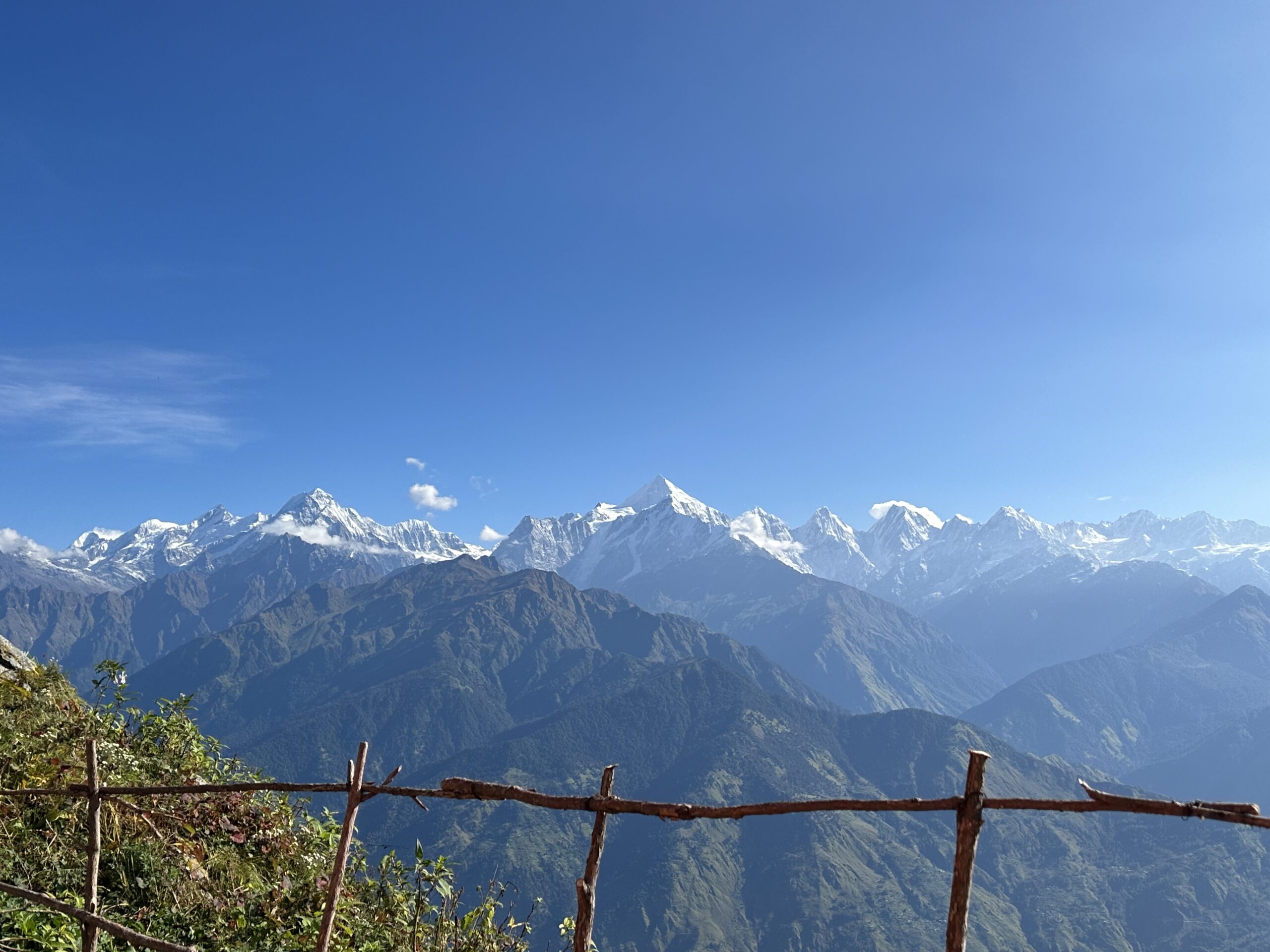
1. Munsiyari, Uttrakhand
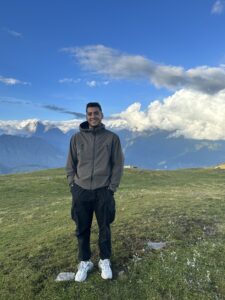
The first morning in Munsiyari doesn’t begin with an alarm. It begins with light.
A soft glow touches the sky outside your window—a slow, golden awakening that wraps itself around the mighty Panchachuli peaks, those five snow-capped sisters standing watch over the valley. It’s the kind of sight that doesn’t shout for attention. It just stands there, ancient and quiet, and suddenly, everything else in the world feels smaller and slower.
This is not just a mountain town. This is a place where the day begins with wonder.
A Window to the Peaks
My room was nothing fancy—a wooden homestay perched on the edge of a ridge, the kind where the walls creak a little and the blankets are thick. But what it did have was a window that faced the Himalayas directly, unfiltered, and breathtaking.
I woke before 6 a.m., not by intention but by instinct. The sky outside was still inky, and the air was crisp. I reached for a shawl and opened the window wider. The cold hit first. Then the silence. Then—light.
As the sun rose behind the hills, it painted the Panchachuli range in layers of blush, amber, and rose gold. One by one, the peaks caught the sun, as if they were being introduced on stage.
I didn’t move. I didn’t want to. Even my breath felt too loud for that moment.
“When the mountains spoke, they didn’t raise their voice. They just showed up in light and waited for you to look.”
Tea, Silence, and the Slow World
A few minutes later, the host knocked gently with a steaming cup of chai, as if she too understood that the mountains deserved a quiet morning.
I sat on the wooden balcony, chai in hand, wrapped in wool and wonder. Somewhere below, I could hear cowbells and the slow hum of village life beginning. But here, in this soft sunrise silence, time slowed.
That’s what Munsiyari does to you.
It doesn’t fill your days with activities. It empties your mind, gently, until you start noticing the details again—the way the wind sounds in the deodars, how the snow glows at the tips, how every step here echoes just a bit longer.
Mountains as Mirror
I came to Munsiyari with a list—places to see, trails to hike, things to check off. But on that first morning, I realized something I hadn’t planned for: just being still. Letting the mountains speak their ancient language, letting the view hold me instead of me trying to hold it.
Because in that quiet morning, I saw myself clearer than I had in months. The mountains don’t give answers. But they make space for the questions.
And sometimes, that’s more than enough.
Planning Your Morning with the Panchachuli
-
Where to Stay:
Choose a homestay or eco-lodge facing the peaks—places like Wayfarer Mountain Resort, Johar Hilltop, or Milam Inn are great options. -
Best Time to Visit:
March to June and September to November offer clear skies and panoramic views. -
What to Bring:
Warm layers, thermos, journal, camera (if you must), but mostly—your stillness.
Final Thoughts
You don’t need Wi-Fi to connect deeply in Munsiyari. Just a sunrise, a cup of tea, and the willingness to listen when the mountains whisper.
So if you ever find yourself lost or loud in life, come here. Wake up early. Open your window. And let the Himalayas remind you how to begin again.
2. Sissu, Himachal Pradesh
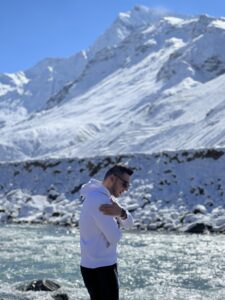
And nowhere is that truer than on the trail to the Sissu Waterfall.
Leaving the Village Behind
The village of Sissu rests quietly under the gaze of snow-dusted peaks, just beyond the Atal Tunnel, where the landscape changes dramatically from Manali’s dense forests to wide Himalayan openness. Life here is simple—stone houses, wheat fields, Buddhist flags fluttering in wind that always smells like cold pine and old earth.
I set off toward the waterfall after breakfast. The locals had pointed beyond the prayer flags, beyond the fields, toward a misty cliff in the distance.
“It looks close,” one of them smiled. “But the mountain decides when you reach.”
The Walk to the Falls
The path was more of an impression than a road—soft dirt and wildflowers, lined with yaks grazing and shepherds passing with low whistles to their flocks. The further I walked, the louder the sound became—a low, rumbling roar of water in motion.
And then, just past a bend in the trail where the valley opened wide, I saw it.
Sissu Waterfall, tall and elegant, pouring off a rock face like melted glass. The sun hit it at just the right angle to create a prism of light—pink and gold mist hung in the air. The spray reached out like fingers across the trail, cool and electric on my skin.
“With each step toward the waterfall, the world peeled back a little—until it was just me, the sky, and the sound of something older than time.”
A Story in the Mist
Just as I sat down near the falls, catching my breath and letting the rumble wash over my thoughts, a shepherd boy appeared, guiding a few goats down a narrow ledge.
He smiled, nodded, and said in broken English, “You know the story?”
I shook my head.
He pointed at the waterfall. “They say there is a spirit of the mountain here. When mist touches your eyes, it shows you something you forgot.”
I asked if he believed it.
He laughed and said, “Sometimes, when I’m here alone… yes.”
The Silence That Follows
I sat for a long time at the base of the waterfall, shoes off, socks drying on a rock. I didn’t take many photos. Some places aren’t meant to be captured—they’re meant to be felt.
The water thundered, but it didn’t feel loud. It felt like a cleansing. The kind of sound that drowns out overthinking and clears space in your chest.
And when I finally stood up to walk back, the wind shifted, and a bit of mist kissed my face.
I remembered something I’d been trying to forget: how good it feels to be fully alive.
Planning Your Walk to Sissu Waterfall
-
Location: Sissu, Lahaul Valley, Himachal Pradesh (25 km from Manali via Atal Tunnel)
-
Trail Type: Easy walk (~1.5 km) from the village to the base of the falls
-
Time Needed: ~2 hours (including sitting time and photos)
-
What to Bring:
-
Good walking shoes
-
Windproof jacket (the spray is chilly)
-
Camera (or don’t, and just be present)
-
Reusable water bottle
-
-
Best Time to Visit: May to October (accessible and snow-free)
Final Thoughts
Some destinations impress you with scale. Others stay with you because they felt like a story you got to step into. The Sissu Waterfall isn’t the biggest in the Himalayas—but it might be one of the most quietly magical. So take the walk. Let the trail slow you down. And when the mist touches your eyes—listen closely. You never know what you’ll remember.
3. Gurez Valley, Kashmir
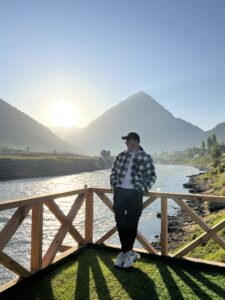
Some places are quiet because nothing happens there. Gurez is quiet because everything meaningful still does. Tucked deep in the Himalayan folds of North Kashmir, past winding roads and military outposts, past rivers that glitter like secret veins, Gurez Valley is where the world forgets its noise—and you remember your breath.
First Light in Dawar
I woke up to the sound of… nothing. Not silence like we know in cities, filled with the hum of a fridge or the passing of a plane. No—this was real, untouched, mountain silence. The kind you could lean into, where even your thoughts seemed to whisper.
Wrapped in a woolen shawl, I stepped out onto the wooden balcony of my guesthouse in Dawar, the main village of the valley. The air was sharp and clean, touched by pine. The sky was still cobalt. And then it happened—first light.
From behind the dark ridge, the Habba Khatoon peak began to catch fire. A golden hue slid down her pyramid-like face, turning rock into rose, into gold, into day. Below, the Kishanganga River shimmered, still half-asleep, still dreaming the night’s last dream.
“In Gurez, even the sun rises gently—as if the mountains have asked the day to come quietly.”
The Feeling of Being Guarded
There’s something protective about Gurez. The mountains here don’t just surround you—they shield you. From over-tourism. From overthinking. From the pressure to perform, move, post, or do. It’s as if the Pir Panjal themselves have pressed pause.
The villagers speak in soft Kashmiri, in the Dard-Shina tongue. Their homes are made of stone and cedar. Life is unhurried. A local baker waves me in for tea and kulcha, and though we don’t share a common language, our shared silence is more fluent than words.
Everywhere I turn: slow footsteps, wool drying in the sun, goats on slate rooftops, a child tossing pebbles into the river. Time bends here.
A Valley of Peace, Near the Border
Gurez sits near the Line of Control (LoC)—a fact that may cause hesitation for many. But perhaps that’s why this place remains so pristine. The sense of fragility only heightens its grace. You feel grateful here. And somehow, even safer than you’d expect.
Soldiers and shepherds coexist on the trails. At checkpoints, you’re greeted with warmth, not suspicion. Everyone who lives here—be it for duty or love—knows the valley isn’t just scenic. It’s sacred.
What the Morning Taught Me
As the sun climbed higher, the chill gave way to soft warmth. I walked along the river, its waters flowing clear and determined. I didn’t check my phone. I didn’t look at a map. I just walked—with no purpose but to feel the land under my feet and watch the light shift on the peaks.
By the time I returned to the guesthouse, my chai had cooled. But my mind felt… warm. Alive. Still.
If You Go
-
Best Time to Visit: Late May to September (roads open and landscapes green)
-
Where to Stay: Traditional wooden guesthouses in Dawar or Tulail; try Habba Khatoon Guest House or Kaka Palace
-
How to Reach:
-
From Srinagar via Bandipora and Razdan Pass (approx. 7–8 hours)
-
Or join an approved tour group, as Gurez is a sensitive region (carry valid ID)
-
-
Must Do:
-
Visit Habba Khatoon Spring
-
Walk along the Kishanganga River
-
Try local breads and apricot jam
-
Stay up to see the clearest starlit skies imaginable
-
Final Thoughts
There are very few places left that still feel wild, real, and whole. Gurez is one of them.
It’s not for those chasing selfies or checklists. It’s for those who crave silence that speaks. Mountains that remember. Mornings that hold you still. Come here if you’re tired of the world’s noise. Come here if you want to learn how to listen again.
4. Chitkul, Himachal Pradesh
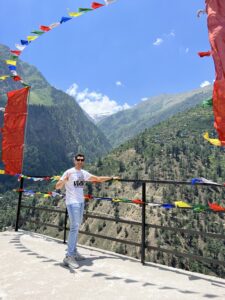
At the very edge of Himachal Pradesh, where the road ends and whispers begin, there lies a village cradled by the mighty Himalayas—Chitkul. It’s not just the last inhabited village before the Indo-Tibetan border; it’s the last breath of silence before the mountains swallow the road. I didn’t come here looking for an adventure. I came looking for something I couldn’t name—something slow, still, and real. I found it at sunrise.
The Coldest Kind of Welcome
The night before had been freezing. Even wrapped in three layers, wool socks, and an extra quilt at the homestay, I could still feel the cold mountain air curl into the gaps between dreams. But it wasn’t the cold that woke me—it was the light.
At 5:45 AM, the room glowed blue. I opened the wooden window to the rawest morning I’d ever seen. Outside, the peaks of the Kinnaur Kailash range were catching fire—flushed pink and golden at the tips, still blue-shadowed at the base. The Baspa River hummed quietly below, still half-hidden by frost. Chimney smoke curled into the air like mountain incense.
It was the kind of stillness that felt holy.
“In Chitkul, the sun rises quietly—as if it, too, doesn’t want to disturb the last village of the valley.”
A Village That Waits With You
I wrapped myself in a shawl and stepped outside. Everything was slow. A woman was already tending to her goats. A child peeked from behind a carved wooden door. The only sound was snow crunching beneath my boots and the river echoing in the distance.
There’s something about Chitkul that suspends time. Maybe it’s the lack of cell signal. Maybe it’s the way the mountains press in, gently but firmly, reminding you you’re a guest here. A visitor in something much older than your maps and schedules.
I passed a prayer flag fluttering beside a wooden chorten. Even the wind here seemed reverent.
Tea, Fire, and First Words
At a small tea stall—just a tin roof, a fire stove, and a smile—I sat by the warmth and sipped butter tea, watching the village wake up. The shopkeeper, Pema, didn’t say much. He didn’t need to.
“First time?” he asked after a while.
“Yes,” I nodded.
He smiled. “You’ll come again. Mountains remember.”
I didn’t respond. My throat was tight in the best way.
When You Let the Light Find You
I hadn’t checked Instagram in days. I didn’t know the time. I hadn’t said more than five words in an hour. And still, I felt more connected than I had in months. Chitkul isn’t the kind of place you ‘do.’ It’s the kind of place you let happen to you. By the time the sun had fully risen and the peaks turned white again, I felt something shift. Like my body had finally slowed enough to catch up with my soul.
Travel Notes from the Last Village
-
How to Get There:
From Shimla via Sangla, the road to Chitkul is about 250 km (approx. 10–12 hours). It’s narrow, thrilling, and best attempted between May to October. -
Where to Stay:
-
Zostel Chitkul (great for solo travelers and groups)
-
The Wanderer’s Nest (for a cozier, local experience)
-
Local homestays with wooden balconies and soul-warming meals
-
-
What Not to Miss:
-
A walk along the Baspa River
-
Visiting the historic Mathi Devi Temple
-
Sitting still and watching the light shift across the peaks
-
Talking to no one and everyone at the same time
-
Final Words
In a world that constantly demands motion, Chitkul invites you to stop. Not because there’s nothing to do—but because there’s everything to feel.
So if you’re tired, wired, or simply yearning for something more real than a screen, come here. Let the sun rise without a rush. Let the mountain keep your secrets. Let the silence remind you of your own voice. Because in the last village of India, you just might find the first peace you’ve felt in a while.
5. Mana Village, Uttrakhand
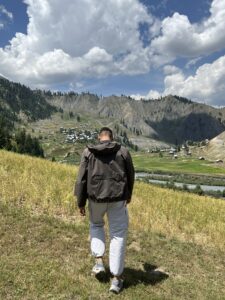
Most treks begin with a trail and end with a view. But some—like the walk from Mana Village to Vasudhara Falls, and beyond—begin with a story. A story older than memory, older than maps. I had come to Mana, the last village before the Indo-Tibetan border in Uttarakhand, seeking silence and scenery. What I found was a path walked by gods, legends, and questions too vast to answer.
The Village Where Myths Live
Located just 3 km from Badrinath, Mana is more than just a remote Himalayan settlement. It’s a place where the Mahabharata still lingers, not as text, but as terrain.
Locals point out caves and paths without fanfare:
-
“That’s Vyas Gufa,” they say. “Where Ved Vyas dictated the Mahabharata.”
-
“This is Ganesh Gufa,” they add. “Where Ganesh wrote it down.”
Stone houses with flat roofs sit against steep cliffs, and Tibetan prayer flags flutter beside ancient Hindu shrines. It’s a village where the line between divine and daily has blurred into dust.
Walking the Pandavas’ Last Journey
From Mana, a narrow trail climbs gently toward Vasudhara Falls, about 6 km away. The locals say this was the final route taken by the Pandavas on their way to Swargarohini—the mythical stairway to heaven.
The trek itself isn’t very difficult, but it’s humbling. At over 12,000 ft, the air is thinner, the wind is older, and the sky feels like it’s breathing just above your head.
Along the way:
-
The Alaknanda River roars below, clear and fierce.
-
Shepherds wave as they pass, guiding shaggy sheep across ancient stone paths.
-
Prayer stones and stacked cairns mark the trail, each one a silent offering.
With every step, you’re not just walking through nature—you’re moving through memory.
“To walk where legends once walked isn’t about distance. It’s about remembering that some journeys don’t end with a view—they end with understanding.”
The Curtain of Vasudhara
After about two hours of slow, deliberate climbing, Vasudhara Falls appears—not with drama, but with grace.
A single, silver ribbon of water cascading from over 400 feet, shimmering in sunlight, misting the stones below.
Legend says that the waters of Vasudhara will only touch the pure of heart.
I reached out. The wind caught the spray and kissed my fingertips. That was enough.
It didn’t feel like a climax. It felt like a pause. Like the earth was waiting for you to look inward before moving on.
To Swargarohini, or to the Self?
Beyond Vasudhara lies the path to Satopanth Tal, and eventually to Swargarohini, the staircase of snow where Yudhishthira is said to have ascended to heaven. Few trek that far. Fewer complete it.
But that’s the thing with mythical paths—you don’t need to reach the end to be changed by the journey.
I sat near the falls for over an hour. Watching the play of light on rock. Listening to silence stretch itself out over centuries. No words came. Only a feeling:
I was exactly where I needed to be.
If You Go
-
Starting Point: Mana Village, 3 km from Badrinath
-
Trek Route: Mana → Saraswati River → Vasudhara Falls (6 km one way)
-
Best Time: Mid-May to October (avoid during monsoon/snow)
-
Altitude: ~12,000 ft
-
What to Bring:
-
Light jacket, water, trail snacks
-
Sun protection (the glare is intense at high altitudes)
-
Respect for the land and its legends
-
Final Words
Some mountain walks leave you breathless. This one leaves you still. In Mana, the road ends. But for the soul, something begins. A quiet reminder that even if we can’t reach the heavens like the Pandavas, we can at least walk with intention, one sacred step at a time.